
Static Dread: The Lighthouse – Signals in the Fog
The first thing Static Dread: The Lighthouse does is make you listen.
Not to music, not to dialogue, but to the hum of old equipment, the crackle of radio static, and the distant roar of waves smashing against stone. Playing it on Xbox, I quickly realised this is not a game that rushes to scare you. It wants to wear you down first.
After spending several hours inside its lonely lighthouse, I can confidently say this is one of the most quietly oppressive indie horror experiences I’ve played recently. It’s not built on jump scares or monsters constantly lunging at you. Instead, it leans heavily into atmosphere, routine, and the slow erosion of certainty, all filtered through a job that should be simple: keep the light on, keep communications running, and survive the night.
Disclosure: I received a free review copy of this product from https://www.keymailer.co
A Job That Never Feels Right
You take on the role of a lighthouse keeper stationed in a remote, fog-choked stretch of sea. Your responsibilities are mundane on paper: monitor equipment, respond to radio transmissions, maintain the light, and log anomalies. But almost immediately, things feel… off.
Radio messages come through distorted and incomplete. Requests don’t always make sense. Ships report impossible coordinates. Sometimes there’s nothing but static, yet you feel compelled to answer anyway.
What Static Dread does brilliantly is frame horror through responsibility. You aren’t exploring a haunted house. You’re working. The game builds tension by making you choose whether to trust your instruments, your instincts, or neither. Every decision feels small in the moment, but carries a lingering sense of consequence.
Routine as Psychological Pressure
The core loop is deceptively simple. You receive transmissions, check systems, perform maintenance, and decide how to respond to what you’re hearing. The lighthouse itself becomes your entire world, with narrow staircases, cramped rooms, and equipment that feels older than it should be.
On Xbox, the controls are clean and deliberate. You’re never fumbling with the interface, which is important because the tension comes from what you’re doing, not how hard it is to do it. Adjusting dials, checking readings, flipping switches, all feel tactile and purposeful.
As the hours pass, the routine starts to fracture. Messages contradict each other. Equipment behaves strangely. You begin to question whether ignoring a call is safer than answering it. The game never tells you outright that you’ve made the wrong choice, but it lets the silence linger long enough to make you regret everything anyway.
Claustrophobia and Isolation
The lighthouse is a masterclass in oppressive design. It’s not large, but it feels inescapable. Tight corridors, low ceilings, and constant ambient noise create a sense that the building itself is listening.
The storm outside is always present. Wind rattles the structure. Waves crash with unsettling force. Occasionally, the foghorn moans in the distance, sounding less like a warning and more like a lament.
What struck me most was how the game uses stillness. There are long stretches where nothing happens, and that’s exactly when your mind starts filling in the gaps. You find yourself staring at doorways, convinced something has changed even when it hasn’t.
The Real Villain
If Static Dread has a monster, it’s sound.
The radio static is relentless, layered with whispers, distortion, and sudden clarity that makes you lean forward instinctively. Voices crackle in and out, sometimes sounding human, sometimes not.
There were moments where I turned down the volume slightly, not because it was loud, but because it felt invasive. The game understands that horror doesn’t need screams. It needs uncertainty.
The lack of traditional music amplifies this. Instead of a score telling you when to feel afraid, the environment does the work. You’re left alone with the hum of machinery and the echo of your own footsteps, and it’s incredibly effective.
Stark and Purposeful
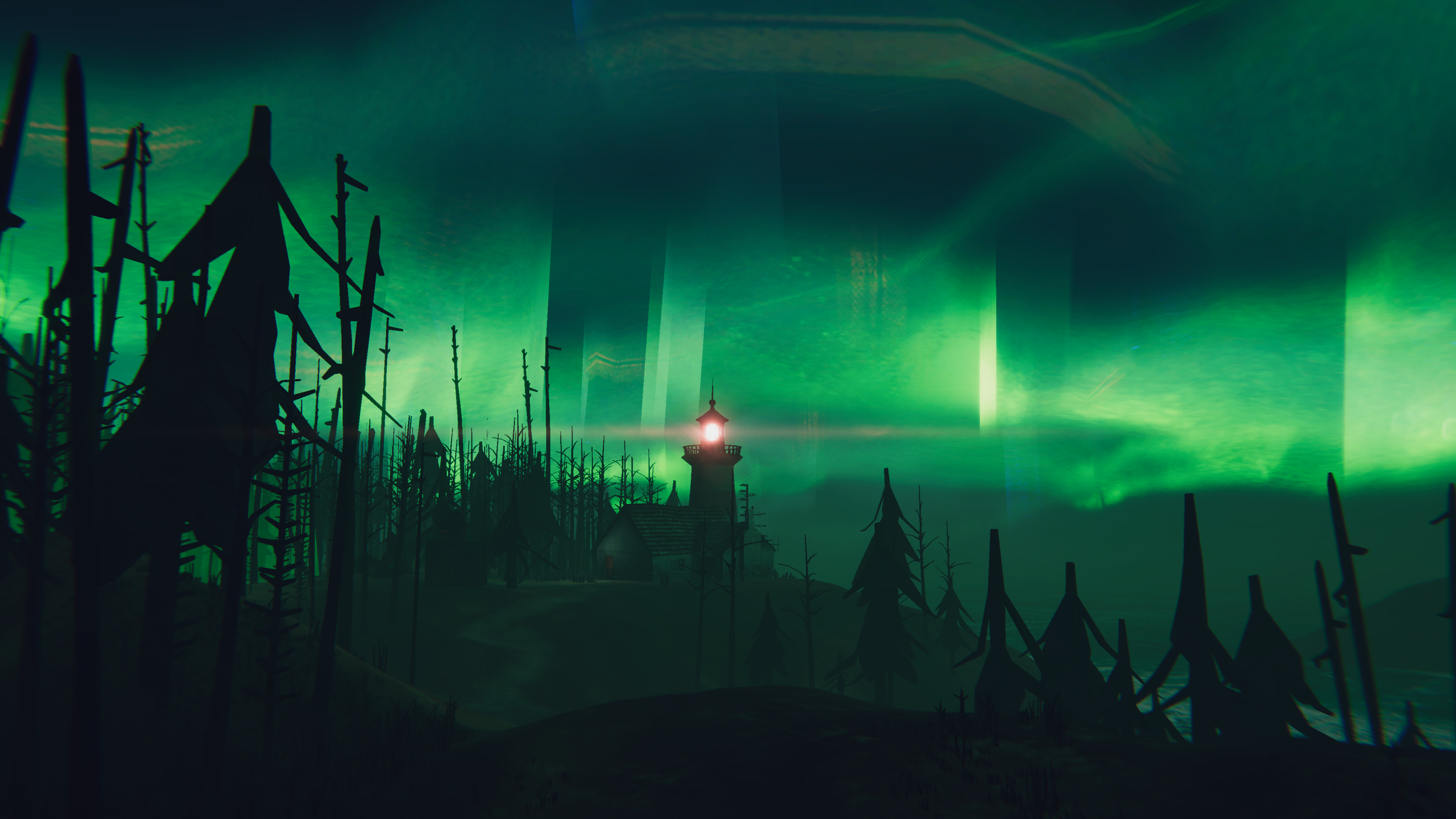
Visually, Static Dread is restrained. The art direction is bleak and functional, which fits the setting perfectly. The lighthouse is rendered with muted colours, heavy shadows, and just enough detail to sell the age and wear of the structure.
On Xbox Series X, performance was smooth and stable, with lighting doing most of the heavy lifting. Flashing indicators, dim bulbs, and the rotating lighthouse beam all play into the tension. You’re never dazzled by visuals, but you’re constantly unsettled by them.
There’s a deliberate lack of visual spectacle here, and that’s a strength. The game isn’t trying to impress you. It’s trying to make you uncomfortable.
Psychological Horror Done Right
What I appreciated most is how Static Dread respects the player. It doesn’t overexplain. It doesn’t rely on shock tactics. It trusts you to notice patterns, to remember what was said earlier, and to feel the weight of your own decisions.
The horror creeps in gradually. By the time you realise you’re unsettled, you’ve already been that way for a while. It reminded me of classic slow-burn horror films, where the fear comes from atmosphere and implication rather than explicit threats.
There are moments where the game flirts with cosmic horror ideas, hinting at something vast and unknowable beyond the fog, but it never fully reveals its hand. That restraint makes the experience far more effective.
What Works Best
What Static Dread: The Lighthouse does best is how confidently it commits to its atmosphere. The tension is constant, but never overwhelming, creating a sense of unease that lingers rather than exhausts. The sound design is a standout, easily among the strongest I’ve encountered in an indie horror game this year, using static, ambient noise, and silence to keep you on edge. Its gameplay loop turns routine tasks into sources of anxiety, proving that repetition can be powerful when paired with uncertainty. Most impressively, the lighthouse itself is fully realised as both a narrative and mechanical space, with every room, staircase, and system reinforcing the game’s themes of isolation and responsibility.
What Might Divide Players
What may divide players is the game’s deliberately slow and restrained pacing. Static Dread: The Lighthouse asks for patience, rewarding observation and listening over constant interaction, which may frustrate those looking for immediate scares or clear direction. Much of the experience is spent waiting, monitoring equipment, and sitting with uncertainty, and the game rarely offers explicit answers or reassurance. That ambiguity is intentional and central to its horror, but players who prefer concrete objectives or narrative clarity may find the lack of resolution unsettling in the wrong way.
Final Thoughts
After my time with Static Dread: The Lighthouse on Xbox, I walked away feeling genuinely unsettled in a way that stuck with me. It’s the kind of game that makes silence uncomfortable and routine feel dangerous.
This is psychological horror built on patience, sound, and atmosphere. It doesn’t shout at you. It whispers, and then waits to see how you react.
If you enjoy slow-burn horror, unsettling audio design, and games that trust you to sit with discomfort, Static Dread: The Lighthouse is absolutely worth your time. Just don’t expect it to let you sleep easily after your shift ends.
I created this website as I feel the state of the games industry and games reporting as a whole has gotten overly negative and full of clickbait. While I understand both of these are a great way to generate engagement, it’s a detriment to those gamers (like myself) that are just trying to enjoy games and not have to worry about the negativity of the current state of the gaming industry. I want a space where gamers can come for unbiased news that doesn’t rely on clickbait or rumours with a dash of humour and have the opportunity to share their passion for games.
#keymailer #StaticDread
